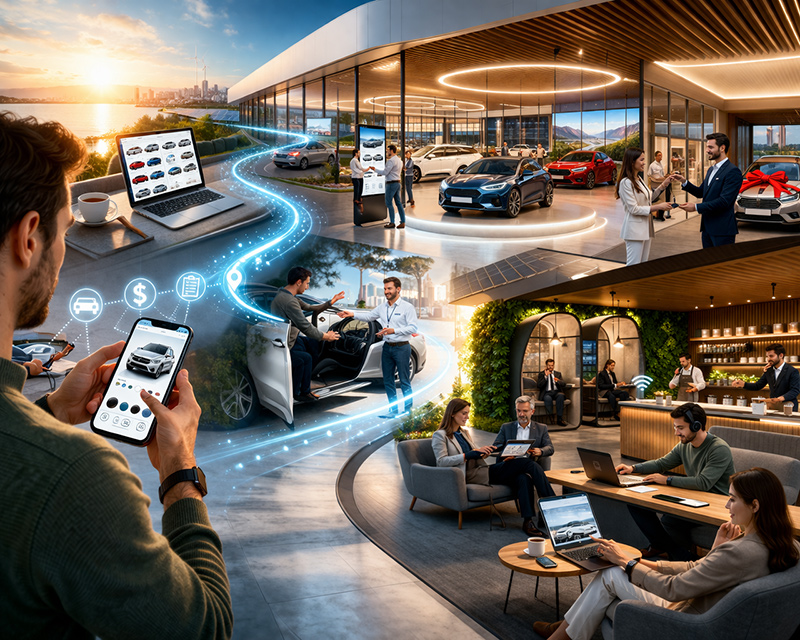

Three simultaneous shifts are reshaping how urban populations move — and each has direct implications for automotive retail.
Ride-sharing and mobility-as-a-service have permanently changed vehicle ownership patterns in dense urban markets. In cities like New York, San Francisco, and Chicago, personal vehicle ownership has stopped growing. Dealerships in these markets are seeing a customer base that is smaller, older, and more transactional.
EV adoption is concentrated in urban markets first. Charging infrastructure, environmental regulations, and buyer demographics all skew EV early adoption toward metropolitan areas. Urban dealerships are absorbing the EV transition ahead of suburban and rural markets.
Connected vehicle technology is changing service patterns. Over-the-air software updates, predictive diagnostics, and connected service bookings have shifted when and why customers visit service departments. The service center is becoming less of a scheduled destination and more of an on-demand touchpoint.
For OEMs and dealer groups planning urban market strategy, the traditional assumption — one large suburban dealership serving a metropolitan region — is under pressure. Several patterns are emerging in response.
Distributed retail formats. Smaller footprint dealerships in dense urban areas, focused on experience and consultation, with service consolidated at fewer larger centers on the metropolitan periphery.
Mall and mixed-use retail integration. Tesla operates showrooms across major shopping centers (Simon malls, Westfield properties, and others), and Rivian and Lucid follow similar direct-sales models with prominent retail locations. Traditional OEMs are considering similar formats for EV brands and consumer-facing lines.
Delivery-first models. Some OEMs are experimenting with dealerships as pickup and consultation points rather than inventory-heavy sales floors.
The fundamentals of retail design still apply — customer experience, brand consistency, operational efficiency. But how those principles get expressed changes as mobility patterns shift. The dealership networks being designed today will serve markets that look different from the ones we know. Getting the design decisions right — location strategy, format sizing, service consolidation, brand experience — requires reading how urban mobility is actually changing, not assuming the model of the past decade will hold.
At VC ONE, this shift is part of the strategic conversation we have with every OEM and dealer group thinking about network refresh. The dealership formats that will succeed in urban markets in 2030 are being designed now.